Digital Safety Buying Guide
Best AI Scam Call Protection Tools for Seniors in 2026
AI voice scams make old advice feel weaker. The answer is not panic; it is a better script: pause, verify through a known number, and never move money because of a surprise call.
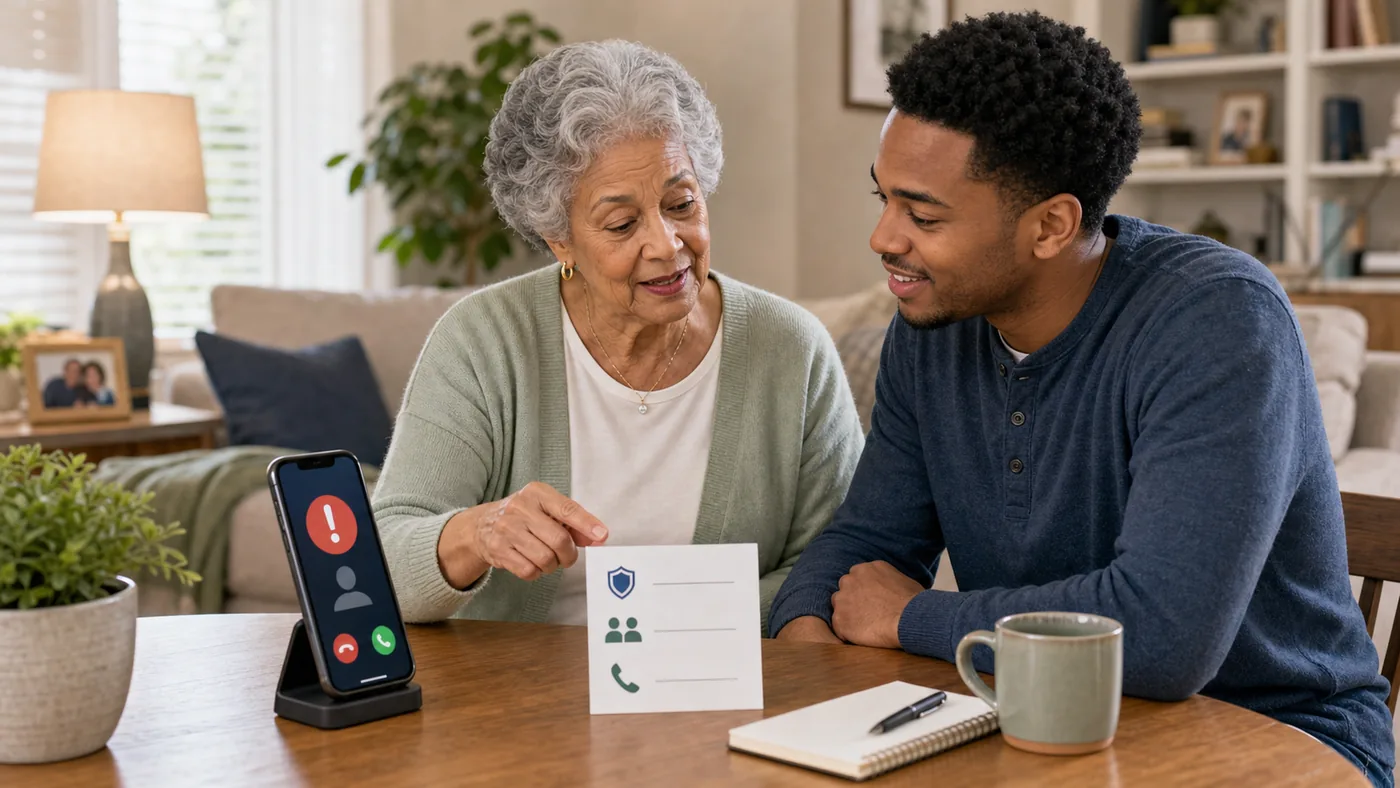
Use technology to reduce noise, but rely on family rules to stop the most expensive mistakes.
A private family verification phrase and a no-urgent-payment rule are more important than any one app.
AI Scam Call Protection Layers
| Situation | Best direction | Why it helps | Check carefully |
|---|---|---|---|
| Frequent unknown calls | Phone and carrier call screening | Reduces pressure moments | Important calls may still need voicemail review |
| Family impersonation risk | Verification phrase and callback rule | Works even when the voice sounds real | Everyone must practice it |
| Tech support pop-ups | Browser/device safety routine | Prevents calling fake support numbers | Needs calm shutdown instructions |
| Payment pressure | Payment pause rule | Blocks gift card, crypto, wire, and courier scams | User must feel allowed to hang up |
Family verification phrase
A phrase can defeat voice-clone pressure because the family is not judging the voice alone.
Good fit when
- Grandparent scams are a concern.
- Family members agree to use it.
- The phrase is not posted online.
Watch out for
It fails if nobody practices it before a real call.
Call screening
Silencing unknown calls or filtering spam reduces the number of high-pressure moments.
Good fit when
- Unknown calls are frequent.
- Important contacts are saved.
- Voicemail is checked.
Watch out for
Scammers can still get through, and caller ID can be spoofed.
No-urgent-payment rule
Most damaging scams eventually ask for money, codes, gift cards, crypto, or secrecy.
Good fit when
- The user handles money independently.
- There is a trusted person to call.
- Rules are written down.
Watch out for
A rule must be short enough to remember under stress.
Family Script
- Hang up first: urgent callers do not get to keep the person on the line.
- Call back through a saved number: never use the number provided by the caller.
- Use the phrase: family emergencies require the agreed verification phrase.
- Pause payments: no gift cards, crypto, wire transfers, cash courier, or codes.
- Report and document: save numbers, messages, and details for reporting.
FAQ
Can AI clone a family voice?
It can imitate voices well enough to create pressure, which is why callback rules matter.
Is call blocking enough?
No. It reduces volume but cannot stop every scam.
What should someone do during a suspicious call?
Hang up, breathe, and call a trusted person or institution through a known number.
Do robocall blockers stop scam calls completely?
No tool stops every call. Carrier features cut a large share of known robocallers, and apps add community-reported numbers, but scammers rotate numbers constantly. The realistic goal is reducing volume enough that an unexpected ring becomes rare and suspicious. A family callback rule remains the strongest defense against AI voice-clone scams.
Should I put a scam call app on my parent’s phone?
Only if someone can manage it. Apps like Robokiller need account setup, renewals, and occasional tuning when a wanted call gets blocked. If no family member will maintain it, carrier-level blocking plus the phone’s built-in silence-unknown-callers feature delivers most of the benefit with none of the maintenance.
What is a family safe-word and why does it help?
It is a word only the real family member would know, agreed on in advance. AI voice cloning now makes caller identity unreliable, so an emotional emergency call should end with the safe-word check and a callback to a known number. It costs nothing and defeats most impersonation attempts.
2026 product decision layer
Real Products to Compare Before You Buy
These are comparison candidates, not affiliate picks. Recheck current price, plan terms, coverage, and return policy before adding any buying link.
| Candidate | Best fit | Why it belongs in the comparison | Watch before buying |
|---|---|---|---|
| AT&T ActiveArmor (carrier feature) | AT&T customers who want network-level scam blocking | Carrier-side blocking before the phone rings, scam risk labeling, and no extra app to learn | Feature scope changes by plan, Android vs iPhone differences, and it only helps on AT&T lines |
| T-Mobile Scam Shield | T-Mobile customers | Free scam ID and blocking, proxy number options, and improved caller ID at the network level | Effectiveness varies by market; check which parts are free vs premium |
| Nomorobo | Landline (VoIP) households plagued by robocalls | Blocks known robocallers on the landline where seniors spend the most time, free tier for VoIP | Works on VoIP lines, not traditional copper; setup requires account access; mobile app is a paid tier |
| Robokiller or Truecaller (mobile apps) | Smartphone users able to manage an app | Aggressive blocking, answer bots, and community-reported spam lists | Subscription cost, battery and privacy tradeoffs, and blocking legitimate calls (doctors, pharmacies) by mistake |
| Built-in iPhone and Android call screening | Anyone, as the first free step | Silence unknown callers, filter unknown senders, and report junk are free and already on the phone | Unknown-call silencing can hide doctor callbacks; maintain voicemail and a check-in routine |
Price and plan terms to recheck before linking
- Carrier features (ActiveArmor, Scam Shield) are the lowest-effort first step because they need no new app and no password to manage.
- Third-party apps that answer or block calls can also block wanted calls. Pharmacies and clinics often show as unknown numbers; set exceptions.
- AI voice-clone scams target family emergency stories. Agree on a family safe-word and a callback rule before buying any tool.
Best editorial recommendation
Turn on the free carrier and built-in-phone features first. Add Nomorobo for a VoIP landline drowning in robocalls. Only then consider a paid app like Robokiller, and pair every tool with a family callback rule.