Home Safety Buying Guide
Best Stove Safety Devices for Seniors in 2026
Stove safety is not solved by one gadget. It combines cooking habits, smoke alarms, shutoff tools, cookware choices, and a realistic plan for memory or attention changes.
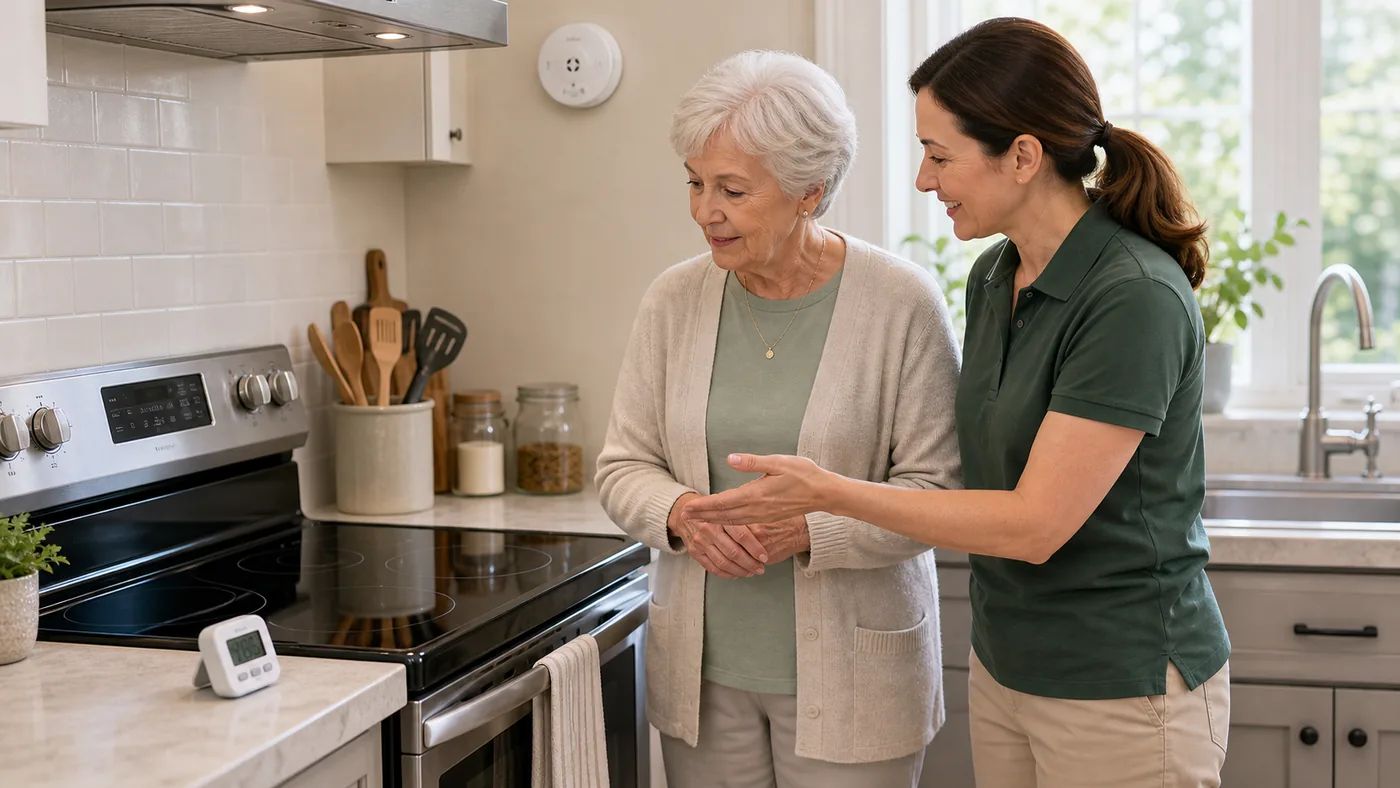
Start with the risk pattern: forgotten burners, leaving the kitchen, smoke events, or unsafe cookware. Then choose a device that fits the actual stove and household.
If dementia, repeated fire incidents, or unsafe cooking patterns are present, families may need a broader cooking safety plan, not only a device.
Stove Safety Direction by Risk
| Situation | Best direction | Why it helps | Check carefully |
|---|---|---|---|
| Forgotten burners | Automatic shutoff device | Can reduce unattended burner risk | Stove type, installation, reset behavior |
| Smoke or overheated pans | Smoke alarms plus cooking routine | Early warning is essential | Alarm placement, battery, hearing ability |
| Open flame concern | Induction or supervised cooking alternative | Can reduce some flame risks | Cookware, learning curve, power needs |
| Memory-related cooking risk | Caregiver plan and appliance limits | May require reducing unsupervised stove use | Dignity, consent, alternatives, nutrition |
Automatic shutoff tool
A shutoff device may help when burners are left on, but compatibility and reset behavior are crucial.
Good fit when
- There is a repeated forgotten-burner pattern.
- The stove type is compatible.
- Someone can install and test it.
Watch out for
Do not assume all shutoff devices work with every gas or electric stove.
Smoke and heat alarms
Alarms are still foundational because many cooking problems show up as smoke or heat before a person notices.
Good fit when
- Hearing is adequate or alarms are linked/visual.
- Batteries are checked.
- Kitchen placement is correct.
Watch out for
An alarm is not a prevention device; someone still has to respond.
Simpler cooking setup
Microwave meals, induction burners, meal delivery, or supervised cooking may be safer than adding more gadgets.
Good fit when
- Memory or attention changes affect cooking.
- There have been near misses.
- Nutrition still needs to be protected.
Watch out for
Removing cooking independence should be handled respectfully.
Stove Safety Checklist
- Identify the pattern: forgotten burner, smoke, distraction, or unsafe cookware.
- Check stove type: gas, electric coil, radiant, and induction have different device compatibility.
- Test alarms: include hearing, bedroom audibility, and visual alerts if needed.
- Write a cooking plan: who cooks, what tools are allowed, and what happens after a near miss.
- Revisit nutrition: safer cooking should not mean poorer meals.
FAQ
Can a stove shutoff device prevent all fires?
No. It may reduce certain risks, but alarms, habits, supervision, and appliance fit still matter.
Is induction safer for seniors?
It can reduce some open-flame risks, but it requires compatible cookware and learning a new control style.
When should cooking be limited?
Repeated dangerous incidents, dementia-related risks, or inability to respond to alarms may require a broader family plan.
Is a stove shut-off device covered by Medicare or insurance?
Generally no. These devices are usually out-of-pocket, though some area agencies on aging and veterans programs offer grants or low-cost programs for home safety modifications. Prices vary by range type and installation needs, so get the range model checked before ordering anything.
What is the difference between a stove timer and an auto shut-off device?
A timer reminds; an auto shut-off acts. Timers help attentive cooks who get distracted, but they do nothing when someone leaves the house or falls asleep. Motion-sensing shut-off devices actually turn the stove off after the kitchen is empty, which is the only category that protects when nobody is there.
Are stove safety devices compatible with gas ranges?
Options are narrower for gas. Most popular auto shut-off products target electric coil and radiant ranges. For gas, look at specialized valves, stove use timers that cut the gas line, or start with a licensed technician or utility safety review before buying anything online.
2026 product decision layer
Real Products to Compare Before You Buy
These are comparison candidates, not affiliate picks. Recheck current price, plan terms, coverage, and return policy before adding any buying link.
| Candidate | Best fit | Why it belongs in the comparison | Watch before buying |
|---|---|---|---|
| StoveShutOff or similar auto-shutoff device | Households where leaving the stove on is a real, repeated event | Motion-based automatic shutoff when the kitchen is left empty, works with existing coil or radiant ranges | Professional installation, compatibility with the specific range model, and cost per unit |
| iGuardStove | Aging-in-place kitchens needing controlled shutoff plus alerts | Combines motion sensing with automatic shutoff and caregiver text alerts | Setup and service details, power requirements, and false-trigger tuning |
| Simple wall-mounted stove timer | Cognitive overload and distraction, not memory loss | A cheap, zero-tech prompt that builds a check-the-stove habit | Only a reminder, not a safety device; useless if the person is out of the room or asleep |
| Smart plug rated for high load with schedules | Electric kettles, small cookers, and other plug-in cooking gear | Remote off switch and schedules for high-risk plug-in appliances | Never use with the stove or oven itself; check amp rating against the appliance |
| Fire Avert stove protector | Electric-range homes wanting sensor-based protection | Temperature-activated shut-off that reacts to oil and food fires on electric coils | Electric ranges only; check sensor placement and compatibility before buying |
Price and plan terms to recheck before linking
- Auto-shutoff devices are the only option that acts when nobody is home. Timers and smart plugs are habits, not safeguards.
- Compatibility is the failure point: confirm the range type (gas vs electric, coil vs radiant) and measure the space behind the stove before ordering.
- For gas ranges, options are narrower; a licensed technician or utility safety program may be the right first call.
Best editorial recommendation
If leaving-the-stove-on is a repeated event, install an auto-shutoff device (StoveShutOff, iGuardStove, or Fire Avert for electric coils). Timers and smart plugs are useful additions, never replacements.