Mobility Buying Guide
Best Walkers and Rollators for Seniors in 2026
A walker or rollator should fit the person, the home, and the walking surface. The wrong device can feel stable in a product photo and awkward in a real hallway.
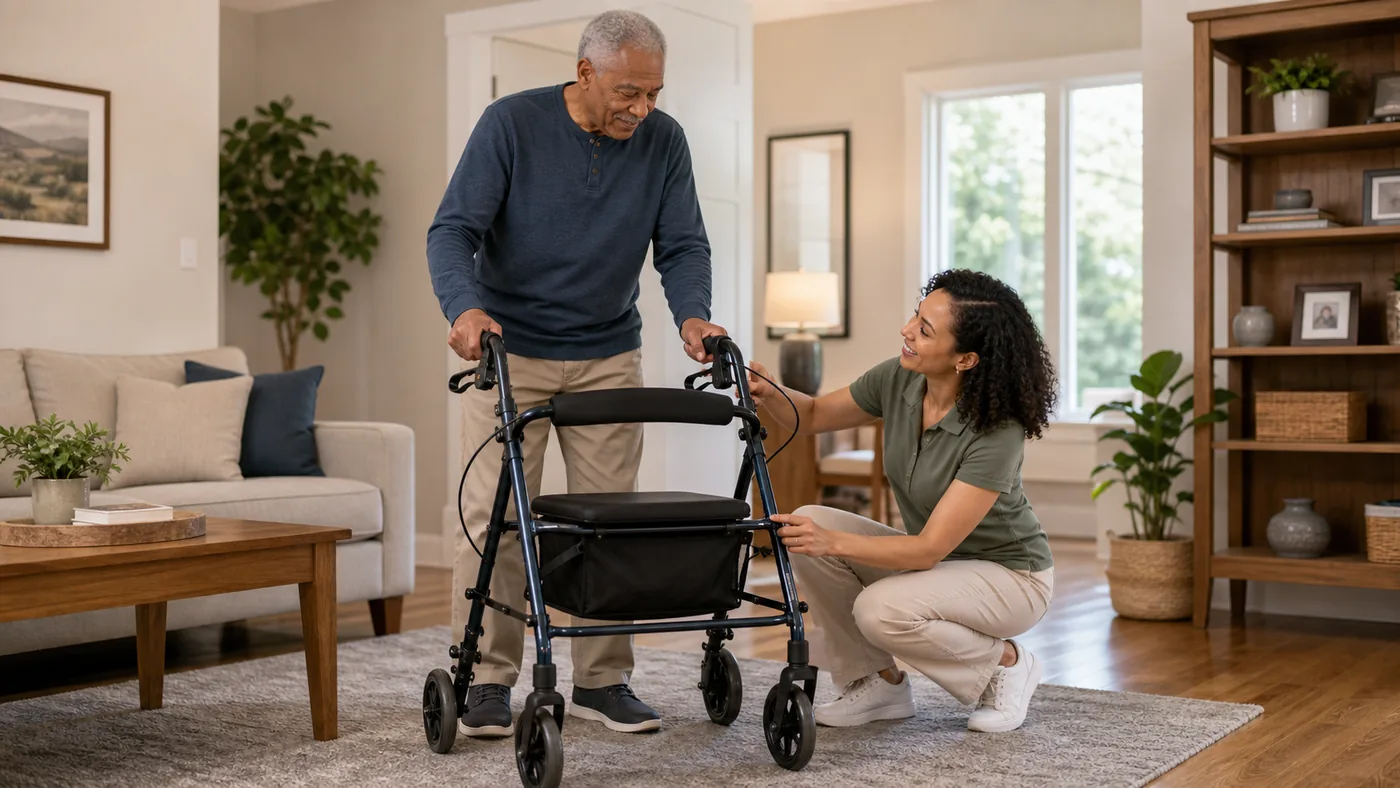
Choose by walking need: maximum stability, outdoor distance, seated rest, tight indoor turns, or caregiver transport. Fit matters more than star ratings.
A clinician or physical therapist can help when falls, weakness, surgery recovery, or changing gait are involved. Product advice is not a substitute for mobility assessment.
Walker Direction by Situation
| Situation | Best direction | Why it helps | Check carefully |
|---|---|---|---|
| Needs maximum stability indoors | Standard walker or two-wheel walker | More stable than many rollators for short indoor moves | Width, height, glide tips, floor transitions |
| Walks longer distances outdoors | Four-wheel rollator with brakes and seat | Wheels and seat support outdoor errands and rest breaks | Brake strength, wheel size, folding, weight |
| Small home or narrow doors | Compact walker or narrow rollator | Turns and doorways matter in real homes | Measure hallways, bathroom door, car trunk |
| Needs seated rest | Rollator with correct seat height | Supports planned breaks | Seat height, weight rating, brake lock, backrest |
Standard or two-wheel walker
A simpler walker may be better when the priority is steady support for short indoor moves.
Good fit when
- The user needs slow, controlled movement.
- The home has tight spaces.
- A clinician recommends more stability.
Watch out for
It may be tiring outdoors and awkward on uneven surfaces.
Four-wheel rollator
A rollator can support longer walks and rest breaks when brakes and fit are right.
Good fit when
- The user can safely control hand brakes.
- Outdoor surfaces are part of the routine.
- A seat would make errands realistic.
Watch out for
A rollator can roll away if brakes are misunderstood or too hard to squeeze.
Measure before buying
Door width, turning space, bathroom layout, and car storage determine whether the device is actually useful.
Good fit when
- The home has narrow halls.
- The device must travel in a car.
- The bathroom is tight.
Watch out for
Do not buy based only on height and weight ratings.
Fit Checklist
- Measure handle height: the user should not hunch or reach upward.
- Test brakes: hands must operate and lock them comfortably.
- Check doorways: measure bedroom, bathroom, hallway, and entry doors.
- Match surfaces: indoor floors, sidewalks, gravel, and thresholds need different wheels.
- Plan transport: folded size and weight matter if the device goes in a car.
FAQ
Is a rollator better than a walker?
Not always. Rollators help with distance and rest breaks, but a standard walker can be more stable for some users.
What is the biggest buying mistake?
Buying without measuring the home and testing brakes. Fit and control matter more than features.
Should a clinician help choose?
Yes, especially after falls, surgery, weakness, or major gait changes.