Digital Safety Buying Guide
Best Scam Protection Tools for Older Adults in 2026
The best scam protection is not one app. It is a small system: fewer unwanted calls, stronger passwords, a family verification rule, and a pause before money moves.
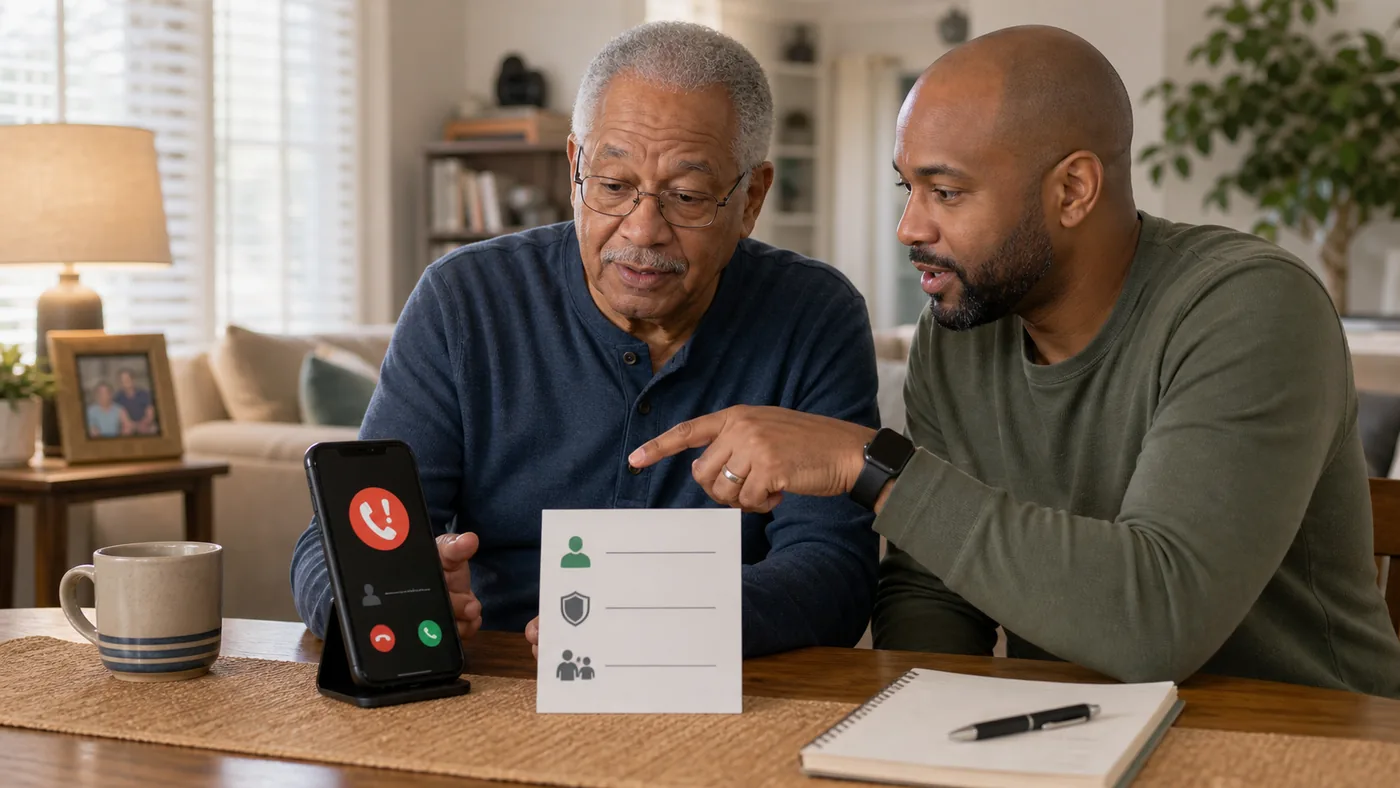
Scams are faster, more personal, and more believable than they used to be. Protection should focus less on fear and more on repeatable habits: verify, pause, call back through known numbers, and never move money under pressure.
Create a family verification phrase and a payment pause rule before buying software. Tools help, but rules stop many scams before money leaves the account.
Scam Protection Layers
| Layer | What it does | Best for | Watch out for |
|---|---|---|---|
| Carrier and phone spam filtering | Reduces unwanted calls and messages before the user answers | Anyone getting frequent unknown calls or suspicious texts | Important calls can still be missed, and some scam calls still get through |
| Password manager | Stores strong unique passwords and reduces reuse | Families managing many accounts, subscriptions, and recovery details | Someone must help set it up and keep recovery access safe |
| Two-factor authentication | Adds a second step before account access | Email, banking, shopping, phone carrier, and health portals | Lost phones and confusing prompts need a backup plan |
| Family verification phrase | Stops urgent impersonation calls, texts, and AI-voice-style pressure | Grandparent scams, fake emergency calls, and family impersonation | It only works if everyone practices and keeps it private |
| Payment pause rule | Blocks gift card, crypto, wire, cash pickup, and courier scams | Any request involving urgent money movement | The user must feel allowed to hang up and check with someone trusted |
Family payment pause rule
Write down a simple rule: no gift cards, crypto, wire transfers, cash withdrawals, courier pickups, or payment apps because of a surprise call, text, email, pop-up, or message.
Why it works
- It interrupts urgency.
- It gives the older adult permission to stop the conversation.
- It focuses on the payment method, not whether the story sounds realistic.
Spam filtering and unknown-call habits
Use built-in phone and carrier tools to reduce noise. Then teach a simple callback rule: do not trust the caller ID; call the company, bank, doctor, or family member using a number already saved or found independently.
Why it works
- Caller ID can be spoofed.
- Scammers often demand that the person stay on the line.
- A callback through a known number resets the situation.
Password manager plus two-factor authentication
Account safety improves when passwords are unique and recovery information is controlled. A password manager can help, but only if a trusted helper documents the recovery plan.
Why it works
- It reduces reused passwords.
- It makes fake login pages easier to question.
- It helps families manage many important accounts.
2026 Scam Scenarios to Practice
- Grandchild emergency: Hang up and call the family member or parent back through a known number.
- Bank fraud warning: Do not move money. Call the bank using the number on the card or statement.
- Tech support pop-up: Close the browser or shut down the device. Do not call the number on the pop-up.
- Government or police threat: Real agencies do not demand gift cards, crypto, gold, cash courier pickup, or secrecy.
- Package or delivery text: Do not tap the link. Open the retailer or carrier account separately.
FAQ
What is the single best scam protection tool?
A family pause rule is the best first tool. Software helps, but most damaging scams rely on pressure, secrecy, and unusual payment methods.
Should older adults answer unknown calls?
Many families choose to let unknown calls go to voicemail. If the call matters, the person can call back through a saved or independently verified number.
Can AI voice scams fool families?
They can. That is why a family verification phrase, callback rule, and no-urgent-payment rule are more reliable than trying to judge the voice.
Where should scams be reported?
In the United States, suspected internet-enabled fraud can be reported to the FBI’s IC3, and consumer scams can be reported to the FTC at ReportFraud.ftc.gov.
Do scam blockers stop all robocalls?
No service stops determined scammers who spoof local numbers; blocking reduces volume, but the last layer is always a family rule about unknown callers and money requests.
Is it safe to answer calls labeled ‘Scam Likely’?
The label means the carrier flagged the number; legitimate doctors and schools are occasionally mislabeled — let unknown calls go to voicemail and call back verified numbers.
What single rule prevents the most scams?
Never move money based on an unexpected call — verify any urgent payment request by calling the person or company back on a known number.
2026 product decision layer
Scam Protection Stack to Set Up
Lead with habits and settings before paid monitoring. No product can stop every scam attempt.
| Layer | Tools to compare | Best fit | Limits |
|---|---|---|---|
| Phone spam reduction | iPhone Silence Unknown Callers, Android spam protection, carrier spam tools, Lively/RAZ call controls | Reducing interruption and panic from unknown callers | May block legitimate calls; contacts must be kept current |
| Family verification routine | Shared phrase, call-back rule, no-payment pause, written emergency contacts | AI voice, grandparent, family emergency, and urgent payment scams | Only works if family practices it and does not shame the older adult |
| Password and account safety | 1Password, Bitwarden, Apple Passwords, Google Password Manager | Reducing reused passwords and making recovery safer | Setup and recovery can be hard; choose one caregiver-supported system |
| Money movement alerts | Bank/card transaction alerts, credit freezes, credit monitoring, account notifications | Families worried about fraud after suspicious calls or messages | Alerts do not prevent every loss; someone must review them quickly |
| Paid identity monitoring | Aura, LifeLock, Experian, bank-provided monitoring, or similar services | Higher-risk households, prior data breach, or caregiver needing restoration support | Read renewal pricing, family coverage, cancellation, and what restoration help actually includes |
2026 scenarios to name clearly
- AI voice or grandchild emergency: pause, use the family phrase, and call back through a known number.
- Fake tech support: no remote access, gift cards, payment apps, crypto, wire transfers, or bank logins.
- Government, jury duty, Medicare, delivery, or toll-road texts: do not tap links; go to the official site or app directly.
- Investment, romance, or social-media pressure: secrecy, urgency, and guaranteed returns are red flags.