Mobility Buying Guide
Best Wheelchair Cushions for Seniors in 2026
A wheelchair cushion is not just about softness. It affects pressure, posture, transfer height, heat, cleaning, and how long someone can sit comfortably.
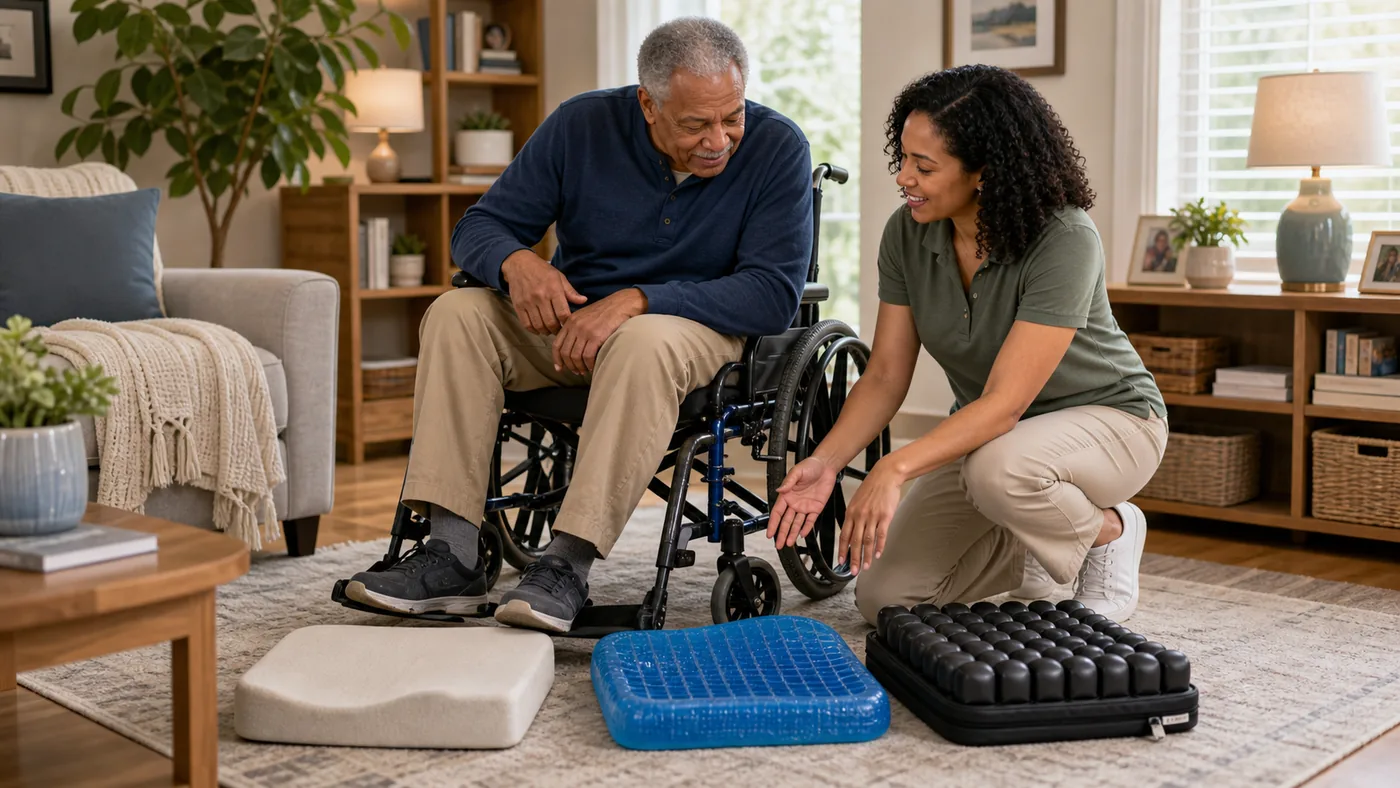
Choose by sitting time and skin risk. A casual transport-chair cushion and an all-day pressure-management cushion are not the same product.
Skin breakdown, pressure injuries, severe pain, or posture problems should involve a clinician, therapist, or seating specialist.
Wheelchair Cushion Direction by Need
| Situation | Best direction | Why it helps | Check carefully |
|---|---|---|---|
| Short transport use | Basic comfort cushion | Adds comfort for errands or appointments | Thickness, slip, cover cleaning |
| Long daily sitting | Pressure-management cushion | Helps distribute pressure | Clinician fit, maintenance, bottoming out |
| Posture support needed | Contoured or positioning cushion | Can improve sitting alignment | Transfer height, stability, therapist input |
| Heat or moisture issues | Breathable cover and cleaning plan | Protects comfort and skin routine | Washability, drying time, incontinence needs |
Comfort cushion
For brief outings, comfort and secure placement may be enough.
Good fit when
- Wheelchair use is occasional.
- Skin risk is low.
- Transfers are easy.
Watch out for
A thick cushion can change transfer height.
Pressure-management cushion
Long sitting time requires more than softness. Pressure distribution and inspection matter.
Good fit when
- The person sits for hours.
- Skin is fragile.
- There is past redness or pressure injury concern.
Watch out for
Do not guess if there is skin breakdown risk.
Positioning cushion
A shaped cushion may help posture, but it needs fit review.
Good fit when
- The user leans or slides.
- Posture affects comfort.
- A therapist is involved.
Watch out for
A cushion that changes posture can also affect transfers and foot position.
Buying Checklist
- Measure the chair: width and depth must fit.
- Check sitting time: longer use raises pressure concerns.
- Inspect skin: redness or sores need professional guidance.
- Check transfers: cushion thickness changes seat height.
- Clean the cover: removable washable covers matter.
FAQ
Is memory foam enough?
It may be enough for comfort, but not necessarily for pressure management.
When should a clinician be involved?
When sitting is long, skin risk is present, posture is poor, or pain is significant.
Can a cushion make transfers harder?
Yes. Extra height or unstable materials can affect transfers.
Walker or rollator — which first?
For indoor flat-floor living a basic walker suffices; once walks go outdoors or exceed a few minutes, a rollator with a seat pays for itself immediately.
Do walkers come in heights for tall users?
Yes — check the adjustable range in the spec before ordering; a too-low walker causes back pain and poor posture within weeks.
Will Medicare pay for a walker?
Durable medical equipment coverage changes frequently and usually covers basic models with a doctor’s order — check current rules before paying out of pocket.
2026 product decision layer
Real Products to Compare Before You Buy
These are comparison candidates, not affiliate picks. Recheck current price, plan terms, coverage, and return policy before adding any buying link.
| Candidate | Best fit | Why it belongs in the comparison | Watch before buying |
|---|---|---|---|
| Drive Medical / basic 2-wheel walkers | Indoor use, mostly flat floors | Cheap, light, folds thin, tips grip indoors | Two-wheel walkers need lifting on thresholds |
| Rollators with seat (Medline / Drive) | Outdoors and longer walks, needing rest breaks | Seat + storage, smooth over sidewalks, brakes | Heavier and bulkier indoors; brake maintenance required |
| Upright (forearm-groove) walkers | Posture or wrist-pressure problems | Forearm troughs reduce wrist pain, more upright posture | Takes adjustment time; not for everyone |
| Knee walkers | Foot/ankle injury recovery (not general mobility) | Lets a healthy leg propel while the injured one rests | Only for specific injuries — wrong tool for balance problems |
Price and plan terms to recheck before linking
- Brake cables and hand grips are the parts that fail first on rollators.
- Seat height and handle height both need to fit the user — measure before ordering.
- Check whether insurance covers a walker before paying out of pocket.
Best editorial recommendation
For indoor flats, a basic 2-wheel walker; the moment walks go outdoors or get long, a rollator with a seat earns its bulk immediately.
Match the Cushion to the Sitting Pattern
The right choice depends on where and how the chair is used, not only on how soft the cushion feels.
- Short trips or occasional transport: prioritize a stable fit, a washable cover, and a thickness that does not make transfers harder.
- Several hours of daily sitting: look for pressure distribution, a supportive base, and a return policy that allows fit testing.
- Frequent transfers: check the combined seat height and cushion height so the user can stand safely without excessive knee strain.
- Uneven posture or sliding: ask a seating specialist about contour and positioning before choosing a highly shaped cushion.
Measure the chair seat, confirm the user weight range, and check that the cushion does not block the chair folding or interfere with footrests and brakes.