Mobility Buying Guide
Best Non-Slip Shoes for Seniors in 2026
Non-slip shoes should not feel like medical equipment. The right pair gives traction, heel support, and enough comfort that the person actually wears them.
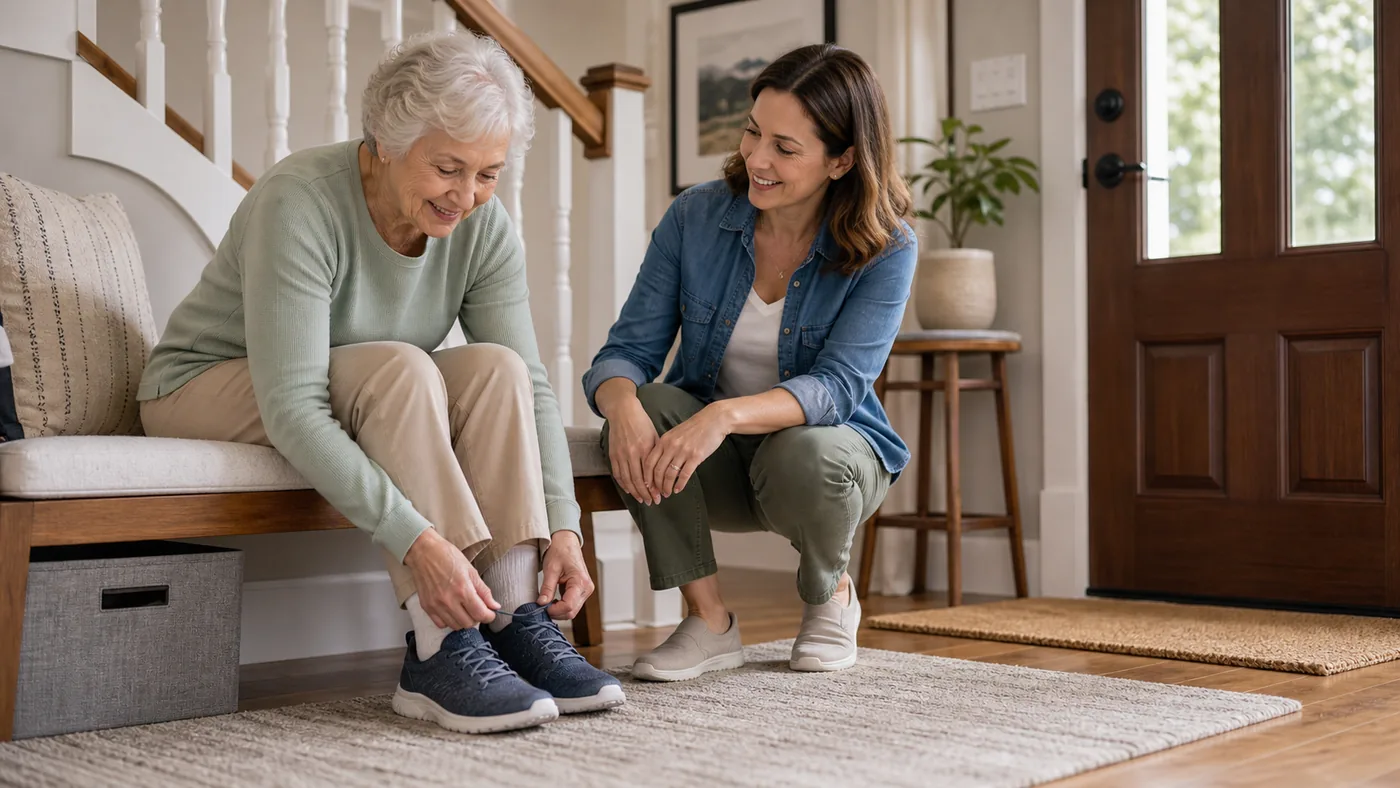
Choose shoes by surface and foot fit. A grippy sole is not enough if the heel slips, the toe box pinches, or the shoe is hard to put on.
Foot swelling, neuropathy, bunions, braces, and balance changes can make return windows and width options more important than style.
Non-Slip Shoe Direction by Use
| Situation | Best direction | Why it helps | Check carefully |
|---|---|---|---|
| Indoor walking | Supportive house shoe with heel back | More secure than loose slippers | Sole grip, heel hold, washable upper |
| Outdoor errands | Walking shoe with grippy outsole | Better traction and support outside | Weight, laces, width, return policy |
| Swelling or foot pain | Adjustable closure and wide sizes | Accommodates daily changes | Pressure points and secure heel |
| Low hand strength | Easy-on closure with stable fit | Reduces bending and tying effort | Avoid loose slip-ons that slide |
House shoe with back and traction
A secure house shoe can be safer than socks or backless slippers on hard floors.
Good fit when
- The user spends most time indoors.
- Floors are slick.
- Loose slippers are common.
Watch out for
Backless slippers can slide off and create trip risk.
Walking shoe with real outsole
Outdoor shoes need grip, support, and enough structure for sidewalks and parking lots.
Good fit when
- Errands and walks are common.
- Weather changes traction.
- The user needs stable heel support.
Watch out for
Too-heavy shoes can change gait.
Adjustable closure
Velcro, zippers, or elastic laces can help when tying shoes is hard.
Good fit when
- Bending is difficult.
- Hands hurt.
- Feet swell during the day.
Watch out for
Easy-on should not mean loose.
Fit Checklist
- Check the heel: it should not slide with each step.
- Test real floors: tile, wood, carpet, bathroom, porch, and sidewalk.
- Watch toe room: toes need space without the shoe feeling sloppy.
- Use return windows: try shoes indoors first.
- Replace worn soles: traction fades with wear.
FAQ
Are slippers safe for seniors?
Some are, but backless or loose slippers can increase trip risk. Look for heel support and traction.
Are non-slip shoes enough to prevent falls?
No. They are one layer alongside lighting, mobility aids, medication review, and home safety.
Should shoes be tight for stability?
No. Secure is good; painful or tight is not.
Are slip-on shoes safe for seniors?
Secured-heel slip-ons can be safe; backless ones usually are not. Styles like Skechers Slip-Ins keep a structured heel cup so the shoe moves with the foot, while traditional backless slippers and flip-flops slide off and contribute to falls. Test any slip-on by walking briskly: the heel should never lift or shuffle.
How often should seniors replace everyday shoes?
Roughly every 12 to 18 months of daily wear, sooner if the outsole tread is visibly smooth or the midsole has compressed. Worn tread is the fall risk that families miss most, because the shoe still looks fine from above. Put a reminder on the calendar to check tread depth twice a year.
What shoe features actually reduce falls at home?
A secured heel, a treaded rubber outsole, a snug but adjustable fit that accommodates swelling, and a low heel drop. Indoor-only shoes with these features beat barefoot and socks on hard floors. Avoid thick, squishy soles for anyone with balance issues; ground feel matters more than cushioning.
2026 product decision layer
Real Products to Compare Before You Buy
These are comparison candidates, not affiliate picks. Recheck current price, plan terms, coverage, and return policy before adding any buying link.
| Candidate | Best fit | Why it belongs in the comparison | Watch before buying |
|---|---|---|---|
| Skechers Slip-Ins Arch Fit | Hands-free entry without sacrificing shoe security | Slip-on with a structured heel that stays secure, wide widths, machine washable, and real arch support | Not backless: verify heel hold; sizing runs roomy; check whether the style suits swelling feet |
| New Balance 928v3 or 877 hook-and-loop | Maximum stability and orthotic-friendly structure | Rollbar stability, hook-and-loop closures, widths up to extra-wide, and durable non-marking outsoles | Higher price and clinical look; verify hook-and-loop grip strength with weak hands |
| Propet TravelActiv or W0001 hook-and-loop | Swelling, braces, and hard-to-fit feet | Adjustable straps across the whole foot, extra depth for orthotics, and very wide size runs | Strap adjustment takes time each wear; style is function-first |
| Vionic walker or leisure shoes | Foot pain plus fall-risk combination | Podiatrist-designed support with a grippy outsole, bridging comfort footwear and safety footwear | Break-in period required; check outsole tread depth before assuming slip resistance |
| Certified slip-resistant outsole styles (Shoes for Crews) | Kitchens, bathrooms, and genuinely wet floors at home | Work-shoe-grade tread patterns designed for oil and water, not just lifestyle marketing | Clinical look and stiffer sole; verify weight and flexibility for all-day wear |
Price and plan terms to recheck before linking
- Slip resistance is not a certified consumer label: judge tread depth, pattern, and rubber softness rather than box marketing.
- Backless slippers and flip-flops are the largest at-home fall contributor in this category; trade convenience for a secured heel.
- Shop late in the day when feet are swollen, and insist on a return window; fit problems are the norm, not the exception.
Best editorial recommendation
For daily wear, a secured-heel slip-in like Skechers Slip-Ins or a hook-and-loop New Balance covers most needs. Add a true slip-resistant outsole style only for genuinely wet floors.