Health Aids Buying Guide
Best Automatic Pill Dispensers for Seniors in 2026
An automatic pill dispenser can reduce missed doses, but it also adds setup, refills, alarms, charging or power, and caregiver responsibility.
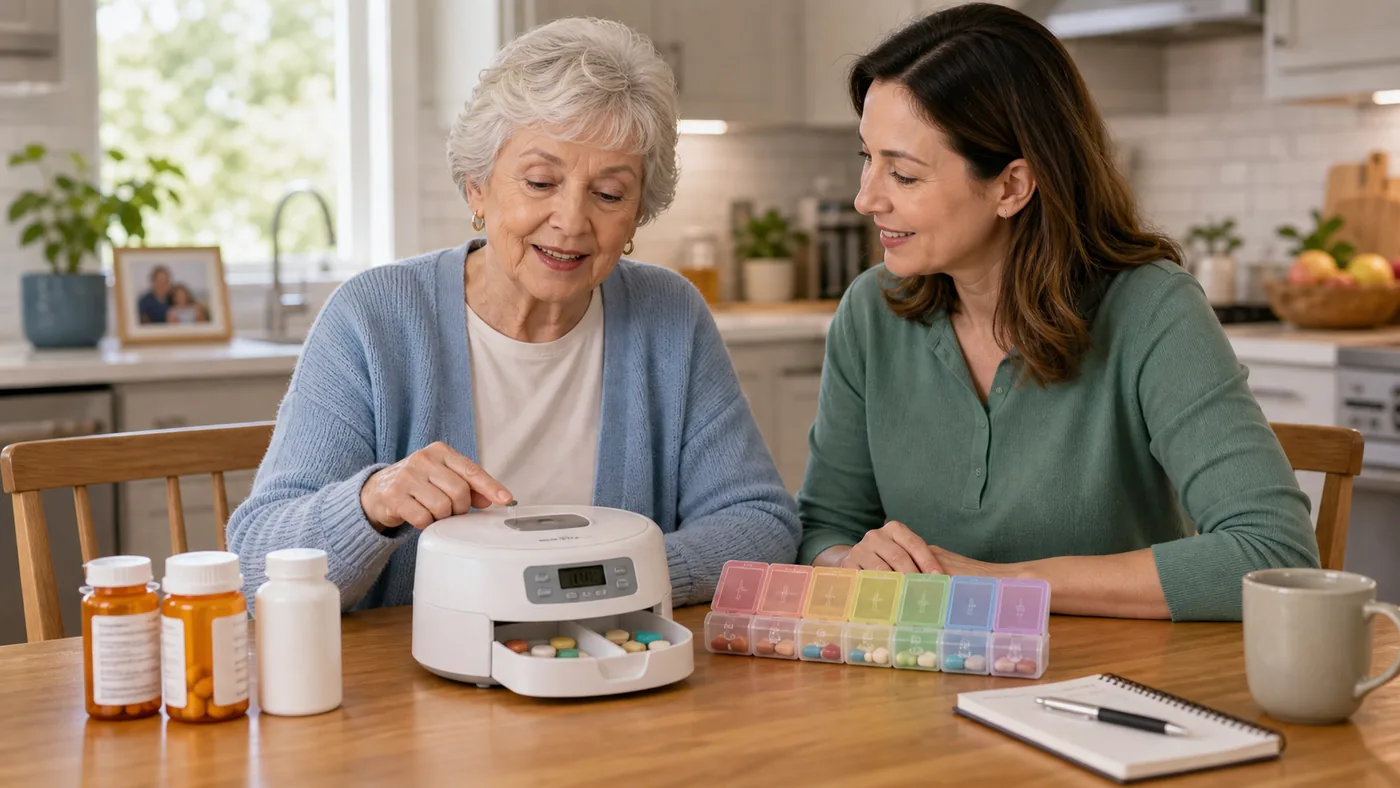
Buy the simplest dispenser that fits the medication routine. A connected dispenser is useful only when someone will respond to missed-dose alerts.
Medication changes, dose timing, missed doses, and side effects should be handled with a clinician or pharmacist, not by product settings alone.
Pill Dispenser Direction by Routine
| Situation | Best direction | Why it helps | Check carefully |
|---|---|---|---|
| Simple once-daily routine | Large weekly organizer or simple alarm box | Low cost and easy to inspect | Manual filling, no locked access, no alerts |
| Multiple doses per day | Timed automatic dispenser | Can reduce confusion about what to take next | Refill workload, alarm volume, tray capacity |
| Caregiver needs missed-dose alerts | Connected dispenser with app or call alerts | Creates visibility when the user misses a dose | Subscription, Wi-Fi/cellular reliability, alert fatigue |
| Medication misuse risk | Locking dispenser plus pharmacist/clinician plan | Can limit access to future doses | Emergency access, refill errors, caregiver responsibility |
Weekly organizer plus reminders
For many people, a visible organizer and phone reminder are easier than a complex dispenser.
Good fit when
- The routine is stable.
- Someone can refill weekly.
- There is low risk of taking extra doses.
Watch out for
It does not prevent double-dosing if the user is confused.
Automatic rotating dispenser
A timed dispenser can make the next dose obvious and reduce access to later doses.
Good fit when
- There are multiple daily doses.
- The user responds to alarms.
- A caregiver can refill accurately.
Watch out for
Check tray size and whether pills fit without crushing or mixing unsafely.
Connected dispenser
Alerts can help when a caregiver needs to know whether a dose was missed.
Good fit when
- A caregiver will respond quickly.
- Internet or cellular connection is reliable.
- Subscription cost is acceptable.
Watch out for
An alert is not useful if no one owns the follow-up.
Buying Checklist
- Map the medication schedule: number of dose times, pill sizes, and refill frequency.
- Ask about locked access: decide whether limiting extra doses is important.
- Plan refills: choose who fills it and how errors are checked.
- Test alarms: volume, tone, lights, and missed-dose behavior should fit the user.
- Review subscriptions: app alerts and monitoring often add monthly costs.
FAQ
Can a pill dispenser prevent all medication mistakes?
No. It can reduce some routine mistakes, but filling errors, medication changes, and ignored alarms still happen.
Who should fill the dispenser?
A reliable caregiver, family member, nurse, or pharmacy-supported service should fill it when the routine is complex.
Is a connected dispenser worth it?
Only if someone will actually monitor alerts and respond when a dose is missed.