Buying Guide
Aging in Place Starter Kit: What to Buy First in 2026
A good aging-in-place starter kit is not a shopping spree. It is a calm first layer: reduce fall risk, make help easier to reach, simplify daily routines, and avoid buying devices that no one will maintain.
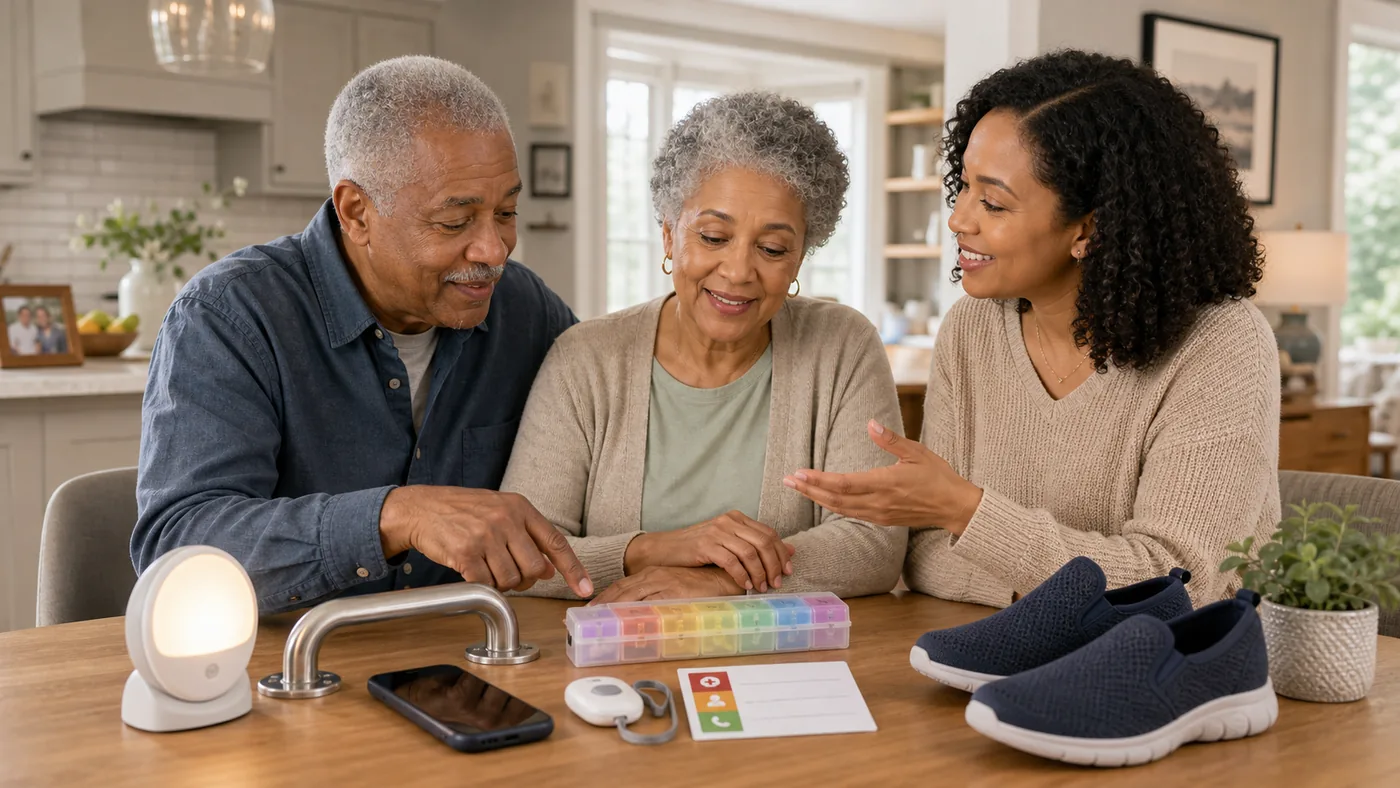
Buy in layers. Start with the home paths and bathroom, then communication and medication routines, then monitoring tools only when they solve a specific problem.
If a product adds alerts, charging, apps, or subscriptions, decide who will maintain it before buying it.
What to Buy First, Second, and Later
| Priority | Product layer | Why it comes here | Do not skip |
|---|---|---|---|
| First weekend | Lighting, clear walking paths, bathroom support, non-slip surfaces | Falls are high stakes, and these fixes usually do not require apps or subscriptions | Measure the actual space and remove trip hazards before buying more devices |
| First two weeks | Easy phone setup, emergency contacts, scam-call controls, visible contact list | Help must be easy to reach, and scams increasingly start through phone calls or messages | Practice using the phone while calm, not during an emergency |
| First month | Medication routine support, large clock, simple calendar, refill reminders | Routine problems are easier to solve before they become missed doses or caregiver conflict | Keep the system simple enough for the person and caregiver to sustain |
| Later, if needed | Door sensors, fall detection, medical alert systems, GPS tools | Monitoring can help, but only when privacy, consent, false alarms, and response workflow are clear | Do not add surveillance-style tools without a family agreement |
Home path and bathroom safety
Start where falls are most likely to change independence: nighttime paths, bathroom transfers, wet floors, loose rugs, and poor lighting.
Buy first
- Motion night lights for bedroom-to-bathroom paths.
- Properly mounted grab bars where someone reaches.
- Shower chair or transfer bench when standing is tiring.
- Non-slip strips or mats that stay flat and clean easily.
Communication and help access
A phone that is easy to answer, charge, and use is part of home safety. So is a plan for unknown callers and urgent messages.
Set up first
- Large text, loud ring, favorite contacts, and emergency contacts.
- Spam-call filtering and a family rule for suspicious payment requests.
- A visible paper backup list near the main phone or refrigerator.
Routine support
Simple routine tools can reduce caregiver friction. The best ones are visible, repeatable, and easy to reset after a power outage or schedule change.
Consider
- Large display clock with day/date.
- Simple medication organizer or automatic dispenser when appropriate.
- Calendar or reminder board for appointments and visits.
Monitoring only when justified
Fall detection, door sensors, and GPS tools can be valuable, but they create privacy and response responsibilities. They are not starter-kit defaults for every household.
Use when
- There is a specific risk, such as wandering, missed check-ins, or falls.
- The older adult understands and accepts the tool when possible.
- Someone is responsible for responding to alerts.
30-Day Starter Plan
- Day 1: Walk the normal morning, evening, and bathroom routines. Note where hands reach, where lights are weak, and where clutter causes detours.
- Weekend 1: Fix lighting, rugs, cords, bathroom support, and shower seating before buying smart devices.
- Week 2: Simplify phone setup, contact list, scam rules, and emergency contact workflow.
- Week 3: Add medication and calendar support only where the current routine breaks down.
- Week 4: Decide whether monitoring tools are needed, and write down who receives alerts and what they do next.
FAQ
What should I buy first for aging in place?
Start with lighting, clear paths, bathroom support, and phone access. These are usually more useful than expensive connected devices at the beginning.
Are smart home devices part of a starter kit?
Sometimes, but not automatically. Smart plugs, sensors, and cameras add setup and privacy questions. Use them when they solve a named problem.
How much should families buy at once?
Less than they think. A focused first month is better than filling the home with products the older adult has not practiced using.
Should caregivers choose everything?
No. When possible, involve the older adult in decisions. Products are more likely to be used when they fit the person’s dignity, habits, and home.
What should a family buy first for aging in place?
Bathroom grab bars and a shower chair, then night lighting — these two categories prevent the most common serious injuries for the least money.
How much does a sensible starter kit cost?
The safety core (bars, chair, night lights, basic pill organizer) typically costs a few hundred dollars installed — far less than one emergency room visit.
Should we add smart home devices in the first month?
Only after the bathroom and night path are done; technology adds value later but prevents fewer injuries than the boring basics.
2026 product decision layer
Starter Kit Products Worth Comparing
This starter kit should reduce risk before it adds apps. Exact SKUs should be verified during launch week for size, ratings, installation needs, and image rights.
| First problem | Candidate product direction | Examples to compare | Buy only after checking |
|---|---|---|---|
| Dark path from bed to bathroom | Warm motion night lights or under-bed motion strip | GE/Enbrighten-style plug-in lights, Mr Beams-style battery path lights, low-glare LED strip kits | Outlet location, glare, battery routine, cords, and whether the sensor turns on early enough |
| Reaching for towel bars or walls | Proper wall-mounted grab bars | Moen Home Care, Delta, or other ADA-style grab bars with secure mounting | Studs or anchors, bar length, diameter, weight rating, and professional installation |
| Tiring or risky showers | Shower chair or transfer bench | Drive Medical, Medline, Carex, and similar adjustable bath-safety seats | Bathroom measurements, seat height, drainage, rubber feet, weight rating, and caregiver access |
| Missed routines | Low-maintenance reminders before connected devices | Large day/date clock, weekly pill organizer, printed contact card, shared family calendar | Who resets it, who refills it, and what happens during travel or power loss |
| Specific monitoring concern | Connected support only when justified | Medical alert, fall-detection watch, door sensor, GPS tracker, or automatic pill dispenser | Consent, privacy, false alarms, monthly fees, and who responds to every alert |
30-day buying order
- Fix lighting, cords, rugs, bathroom supports, and shoe safety first.
- Simplify the phone, emergency contacts, and scam-response routine next.
- Add medication and orientation tools only where the current routine fails.
- Add monitoring tools last, after the family agrees who receives and handles alerts.