Daily Living Buying Guide
Best Adaptive Clothing for Seniors in 2026
Adaptive clothing is best when it looks like clothing the person would actually choose, while making dressing less painful, less rushed, and more dignified.
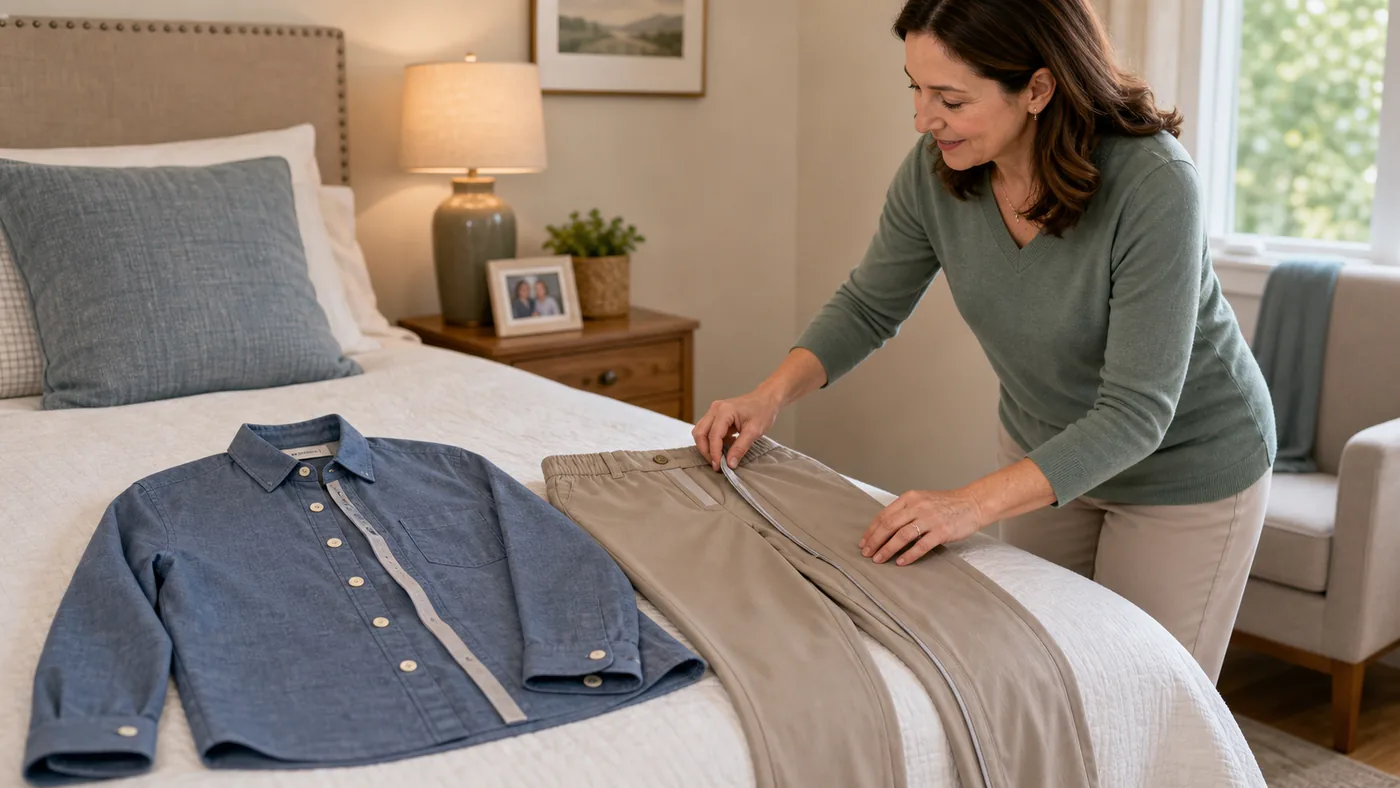
Choose by dressing problem, not by age. Arthritis, shoulder pain, wheelchair use, incontinence care, and caregiver dressing each require different designs.
The person should have style, color, and privacy choices whenever possible. Easier care should not erase identity.
Adaptive Clothing Direction by Need
| Situation | Best direction | Why it helps | Check carefully |
|---|---|---|---|
| Arthritis or hand pain | Easy closures and pull tabs | Reduces buttoning and gripping | Closure strength, wash durability |
| Limited shoulder movement | Open-back or side-opening tops | Reduces overhead dressing | Privacy, caregiver technique, comfort |
| Wheelchair use | Seated-fit pants and tops | Improves comfort while sitting | Back rise, seams, pressure points |
| Caregiver-assisted dressing | Adaptive designs with familiar look | Can reduce struggle and time | Consent, dignity, laundry routine |
Easy closures
Velcro, snaps, magnets, and larger pulls can help when small buttons are frustrating.
Good fit when
- Buttons are hard.
- Hands hurt in the morning.
- The person still dresses independently.
Watch out for
Magnets may not be appropriate for everyone with implanted medical devices; check manufacturer warnings and clinician guidance.
Wheelchair-friendly fit
Seated clothing should reduce bunching, pressure, and awkward waistlines.
Good fit when
- The user sits most of the day.
- Transfers are frequent.
- Back seams or waistbands cause discomfort.
Watch out for
Standing-fit clothing may pull or bunch when seated.
Assisted-dressing clothing
Open-back or side-opening garments can make care calmer when dressing is painful or slow.
Good fit when
- A caregiver helps dress.
- Shoulder mobility is limited.
- Privacy can be preserved.
Watch out for
The design should still feel respectful and familiar.
Buying Checklist
- Start with one problem: buttons, overhead dressing, seated comfort, or toileting.
- Ask style preferences: color and fit still matter.
- Check closures: they should survive washing and not scratch skin.
- Consider medical devices: magnets and compression need extra care.
- Test care routine: laundry, dressing steps, and caregiver access.
FAQ
Is adaptive clothing only for nursing homes?
No. It can help at home after surgery, with arthritis, with wheelchair use, or during caregiver-assisted dressing.
Are magnetic closures safe?
They may not be appropriate for every person or device. Check product warnings and ask a clinician when implants are involved.
What should families avoid?
Clothing that solves caregiver speed while ignoring comfort, dignity, or personal style.
How long do wheelchair cushions last?
Foam compresses within months of daily use; gel-foam hybrids last about a year; air-cell cushions last years but need weekly inflation checks.
Which cushion is best for preventing pressure sores?
High-profile air-cell cushions redistribute pressure best, but any existing skin issue needs a clinician’s assessment, not a store purchase.
Does cushion thickness matter more than material?
Material and design matter more than thickness alone — a thick foam cushion still bottoms out under daily sitting.
2026 product decision layer
Real Products to Compare Before You Buy
These are comparison candidates, not affiliate picks. Recheck current price, plan terms, coverage, and return policy before adding any buying link.
| Candidate | Best fit | Why it belongs in the comparison | Watch before buying |
|---|---|---|---|
| ROHO / high-profile air cushions | Long sitting hours, existing skin issues | Pressure redistribution gold standard | Price, puncture risk, needs inflation checks |
| Gel-foam hybrids (Skil-Care class) | Moderate risk, easier maintenance | No inflation to manage, cheaper, wipe-clean | Heavier; less pressure relief than true air |
| Basic foam wedges/contours | Occasional wheelchair use, low risk | Very cheap, light, no maintenance | Foam compresses and dies within months of daily use |
| Cushions with covers + straps | Active users transporting chairs | Stays attached to the chair, washable covers | Cover washing shrinks fit over time |
Price and plan terms to recheck before linking
- Pressure injuries develop fast — any existing skin issue warrants a clinician, not a store cushion.
- Air cushions need weekly inflation checks to actually protect.
- Cushion + back support combination matters more than cushion alone for posture.
Best editorial recommendation
Air-cell cushions when sitting hours are long or skin is at risk, gel-foam hybrids for everyday moderate use, and never trust compressed foam with daily wheelchair use.