Health Aids Buying Guide
Best Pulse Oximeters for Seniors at Home in 2026
A pulse oximeter can be useful at home, but the number is not the whole story. Symptoms, trend, device fit, skin temperature, movement, and clinician instructions all matter.
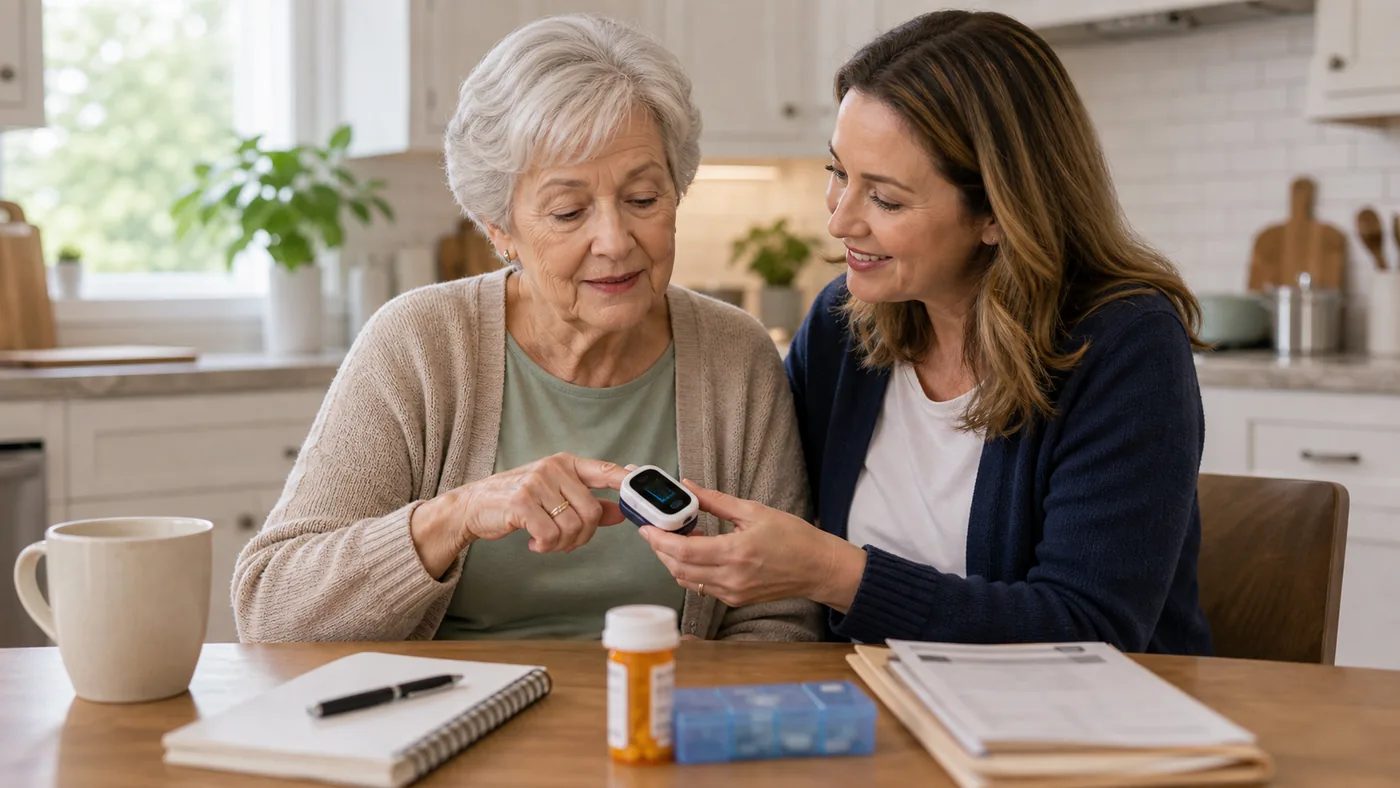
Use a pulse oximeter as a monitoring aid, not a diagnosis tool. If symptoms and the number disagree, take symptoms seriously.
The FDA warns that pulse oximeter accuracy can be affected by skin pigmentation, poor circulation, skin thickness, temperature, tobacco use, nail polish, movement, and other factors.
Pulse Oximeter Direction by Use
| Situation | Best direction | Why it helps | Check carefully |
|---|---|---|---|
| Occasional home checks | Simple fingertip oximeter with clear display | Easy to use for spot checks when directed by a clinician | Fit, steady reading, batteries, display clarity |
| Caregiver logging | Device with memory or written log routine | Helps track trends instead of isolated numbers | Avoid overreacting to one unstable reading |
| Low circulation or shaky hands | Clinician-guided choice | Readings may be harder to trust | Cold fingers, movement, weak signal, false reassurance |
| Breathing symptoms | Medical guidance, not product-only monitoring | Symptoms can matter more than a normal-looking number | Shortness of breath, chest pain, confusion, blue lips, severe weakness |
Clear fingertip oximeter
A simple fingertip device is enough for many households when a clinician has suggested spot checks.
Good fit when
- The user can keep the finger still.
- The display is easy to read.
- A caregiver knows what range or symptoms require a call.
Watch out for
A cheap device with unstable readings can create anxiety or false reassurance.
Trend log
A paper or app log can be more useful than staring at one number.
Good fit when
- Readings are taken at similar times.
- Symptoms are written down too.
- The clinician reviews trends.
Watch out for
Do not compare readings taken in completely different conditions.
Symptom-first plan
Families should know what symptoms override a device reading.
Good fit when
- There are respiratory or cardiac concerns.
- The user has trouble describing symptoms.
- Caregivers need clear call thresholds.
Watch out for
A normal number does not always mean the situation is safe.
Use Checklist
- Warm the hand: cold fingers and poor circulation can affect readings.
- Keep still: movement can make the number unreliable.
- Remove barriers: nail polish or artificial nails may interfere.
- Wait for a stable reading: do not react to a flickering number.
- Follow a care plan: ask a clinician what readings or symptoms require action.
FAQ
Can a pulse oximeter diagnose a problem?
No. It is a monitoring tool. Diagnosis and treatment decisions should involve a clinician.
Can readings be wrong?
Yes. The FDA lists several factors that can affect accuracy, including skin pigmentation, circulation, temperature, movement, and nail polish.
Should symptoms matter if the number looks normal?
Yes. Shortness of breath, chest pain, confusion, blue lips, or severe weakness should not be ignored because of one reading.
Why do home oximeters give different numbers each time?
Cold hands, nail polish, poor circulation, and movement all shift readings — warm the hand, rest it still, and take the best of three consistent values.
What SpO2 number should trigger a doctor call?
Consistent readings clearly below the range your doctor set for you (commonly low 90s) warrant a call; a single odd reading after retesting does not.
Are smartwatch oxygen readings medical grade?
No — wearable SpO2 is trend data. It can reveal overnight patterns, but decisions belong with a fingertip device and a doctor.
2026 product decision layer
Real Products to Compare Before You Buy
These are comparison candidates, not affiliate picks. Recheck current price, plan terms, coverage, and return policy before adding any buying link.
| Candidate | Best fit | Why it belongs in the comparison | Watch before buying |
|---|---|---|---|
| Fingertip pulse oximeters (Wellue/Zacurate class) | Intermittent home spot-checks | Cheap, instant readings, fine for trending | Readings wander with cold hands, nail polish, poor circulation |
| Oura / smart-ring style trackers | Continuous overnight trend data | Sleep + HR + overnight SpO2 trends in one device | Expensive; SpO2 is trend-grade, not medical-grade |
| Withings sleep mat | Bed-bound nightly monitoring without wearing anything | Nothing to wear or charge, under the mattress | Limited metrics; no spot-check ability |
| Wearables with SpO2 (Apple Watch class) | Users who already wear a smartwatch daily | One device for falls, heart, and SpO2 trends | Battery daily charging; small screen readability varies |
Price and plan terms to recheck before linking
- Home oximeters are trending tools — single low readings need a recheck, not panic.
- Nail polish, cold fingers, and movement all skew fingertip readings.
- For overnight concerns, doctor input beats any consumer device purchase.
Best editorial recommendation
A $25 fingertip oximeter for spot checks plus doctor-guided interpretation; add wearable SpO2 only if the user already wears one happily.