Health Aids Buying Guide
Best Blood Pressure Monitors for Seniors in 2026
A home blood pressure monitor is only useful if the cuff fits, the device is validated, and readings are taken the same way each time.
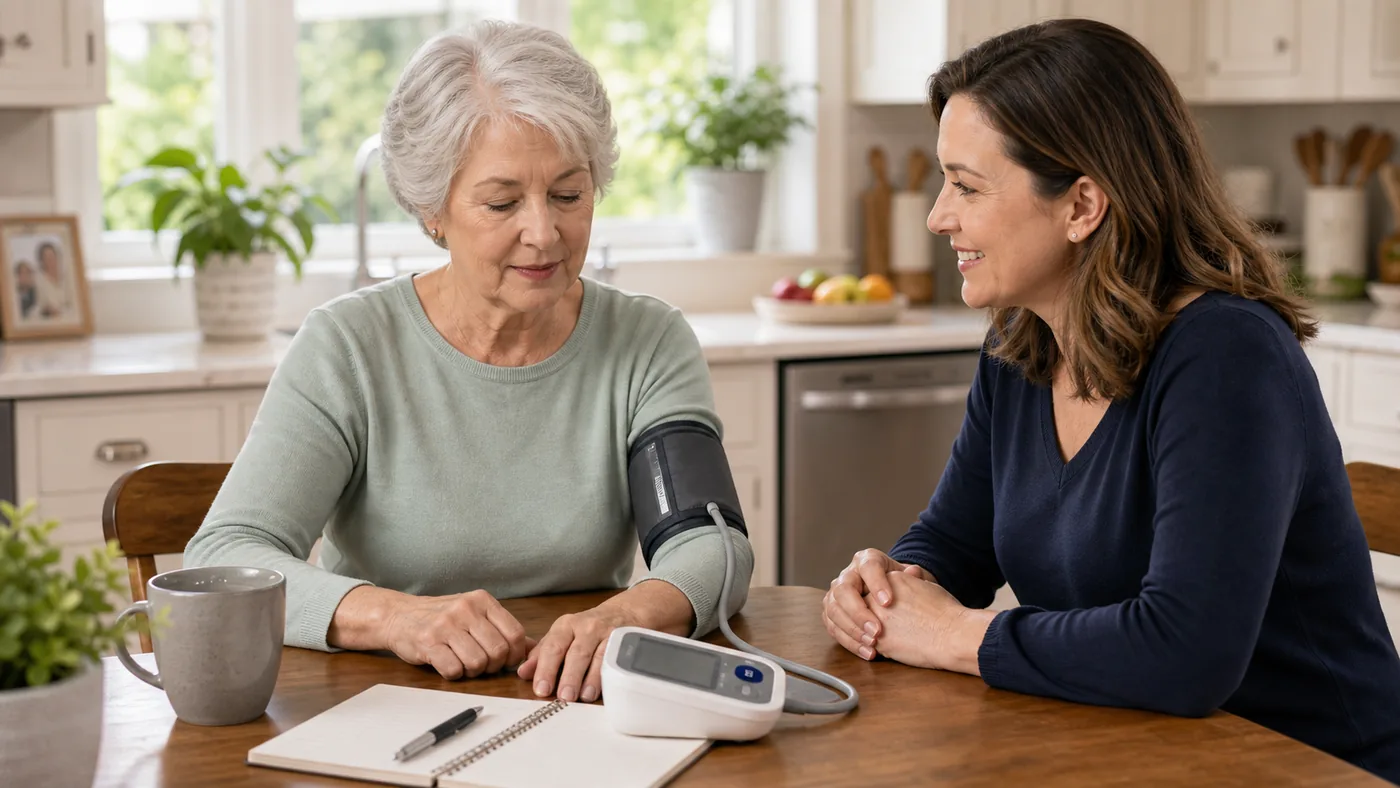
For most older adults, start with a validated upper-arm monitor with the right cuff size. Wrist monitors can be convenient, but positioning mistakes are easier.
Home readings are useful for tracking and sharing with a clinician. They should not be used to change medication without medical guidance.
Blood Pressure Monitor Direction by Need
| Situation | Best direction | Why it helps | Check carefully |
|---|---|---|---|
| Most home users | Validated upper-arm monitor | Best balance of reliability and routine use | Cuff size, validation list, memory, large display |
| Limited arm mobility | Clinician-approved wrist option | May be easier to place independently | Heart-level positioning and accuracy concerns |
| Two users at home | Monitor with multi-user memory | Keeps readings separate for each person | User switching, date/time, export options |
| Caregiver tracking | Bluetooth/app-enabled monitor | Makes sharing trends easier | App complexity, privacy, account recovery |
Validated upper-arm monitor
A validated upper-arm monitor with the correct cuff is the safest starting point for most home routines.
Good fit when
- The user can sit at a table.
- The cuff fits the upper arm.
- Readings need to be shared with a clinician.
Watch out for
Do not buy a one-size cuff without measuring the arm.
Large-display monitor
A simple monitor may beat a smarter device if the user only needs clear readings and memory.
Good fit when
- Vision or dexterity is a concern.
- The user dislikes phone apps.
- A caregiver can write or review readings.
Watch out for
Make sure date/time and memory are not confusing.
Connected monitor
Bluetooth or app tracking can help families notice patterns, but it adds setup and privacy work.
Good fit when
- A caregiver reviews readings remotely.
- The user already handles phone apps.
- The clinician wants logs.
Watch out for
App accounts and syncing failures can become the weak point.
Measurement Checklist
- Use a validated device: check a recognized validation list when possible.
- Measure the arm: cuff size affects accuracy.
- Sit consistently: feet flat, back supported, arm at heart level, cuff on bare skin.
- Track trends: one unusual reading is less useful than a consistent log.
- Share with a clinician: ask when readings require a call or urgent care.
FAQ
Are wrist blood pressure monitors accurate?
They can be useful for some people, but positioning is more sensitive. Many users are better served by a validated upper-arm monitor.
What matters more, brand or cuff fit?
Cuff fit and validation matter more than brand recognition alone.
Should readings be taken over clothing?
No. A cuff should usually be placed on bare skin according to the device instructions.
How do I get accurate blood pressure readings at home?
Sit quietly for five minutes, feet flat, arm supported at heart height, no caffeine or talking during the measurement — take two readings a minute apart.
Are wrist monitors accurate?
Wrist models are position-sensitive and drift unless held exactly at heart level; a correctly-sized upper-arm cuff is the dependable default.
How often should home readings be shared with a doctor?
Bring a week of morning and evening readings to each appointment — trends matter far more than any single number.
2026 product decision layer
Real Products to Compare Before You Buy
These are comparison candidates, not affiliate picks. Recheck current price, plan terms, coverage, and return policy before adding any buying link.
| Candidate | Best fit | Why it belongs in the comparison | Watch before buying |
|---|---|---|---|
| Omron upper-arm monitors (5/7 series) | Doctor-trusted home readings | Validated accuracy, irregular-heartbeat flags, memory | Upper-arm cuffs fit poorly on very thin or large arms — size the cuff |
| Withings BPM Connect / smart arms | Data sharing with adult children | App history, easy sharing, clean design | Premium price; app account required |
| Wrist monitors | When arm cuffs are impractical | Portable, no sleeve removal | Position-sensitive — readings drift unless held exactly at heart height |
| Pharmacy kiosk checks | Occasional verification only | Free, no purchase | Single readings without rest conditions are noisy data |
Price and plan terms to recheck before linking
- Bring the home monitor to a doctor visit at least once to verify readings match.
- Upper-arm models with validated clinical accuracy (Omron, Withings) are worth the premium.
- Sit 5 minutes before measuring — rushed readings mislead medication decisions.
Best editorial recommendation
An upper-arm Omron-class monitor with the right cuff size, verified once against the doctor’s machine; wrist models only as travel spares.